
StepStone

Product creation

Stepstone is a recruitment platform operating across multiple European Markets. Every time a customer needed their applicant tracking system integrated, the work fell to engineering, a bottleneck that scaled badly and pulled developers off product work. 

I designed a system that let Customer Service handle those integrations themselves, without writing code or raising a ticket.  

Increased integrations
0 %
Adoption rate of new tool
0 %
New market roll-outs
0
Users
Customer Service teams in Warsaw and London
Ownership
Integration flow, prototypes, multi-market UI
Role
Product designer

Approach

I needed to understand how integrations actually happened before I could simplify them. I interviewed the customer service and development teams and mapped the existing process end to end.

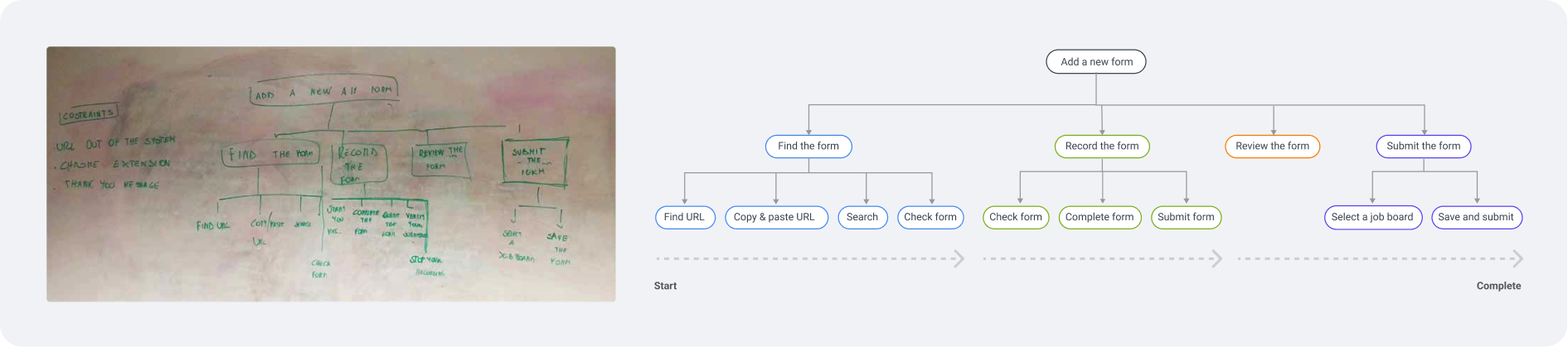
Using that map, I ran a task analysis workshop with key stakeholders and the UX Research team to rebuild the process for people without technical training. It came out of the workshop as three steps.

Outputs from the task analysis workshop showing new simplified three step process

I worked through the technical limits with product leads and development teams, so the proposal stayed buildable rather than aspirational.

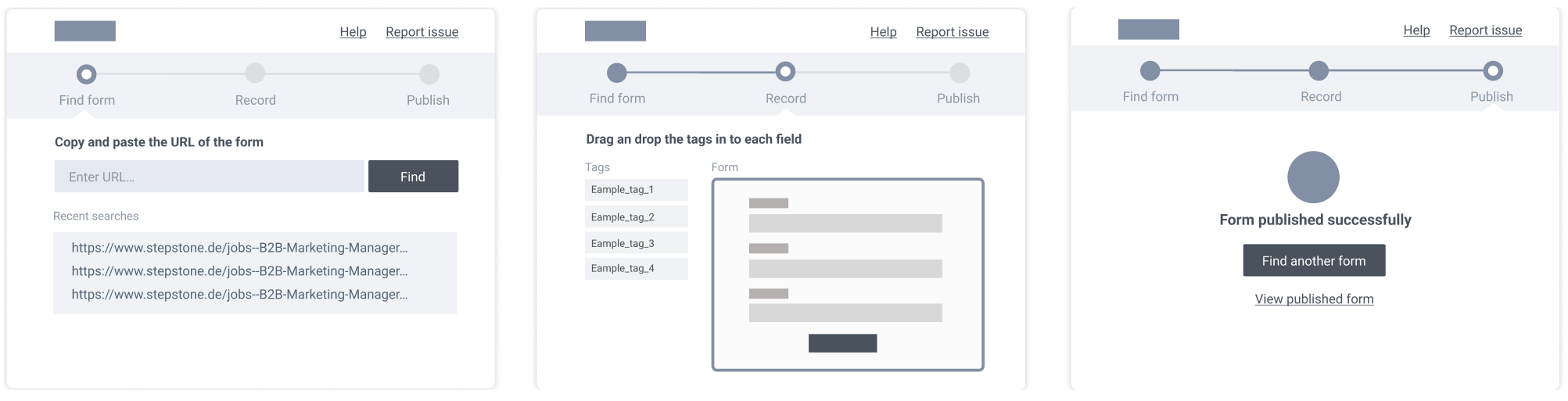
I built a low-fidelity prototype from the new flow. It gave stakeholders something concrete to react to and let me start testing with end users early.

Initial wireframes used in user testing

I refined it into a high-fidelity prototype and tested it with the two user types we had identified: a customer service team with no ATSI experience, and one that already knew the product well.

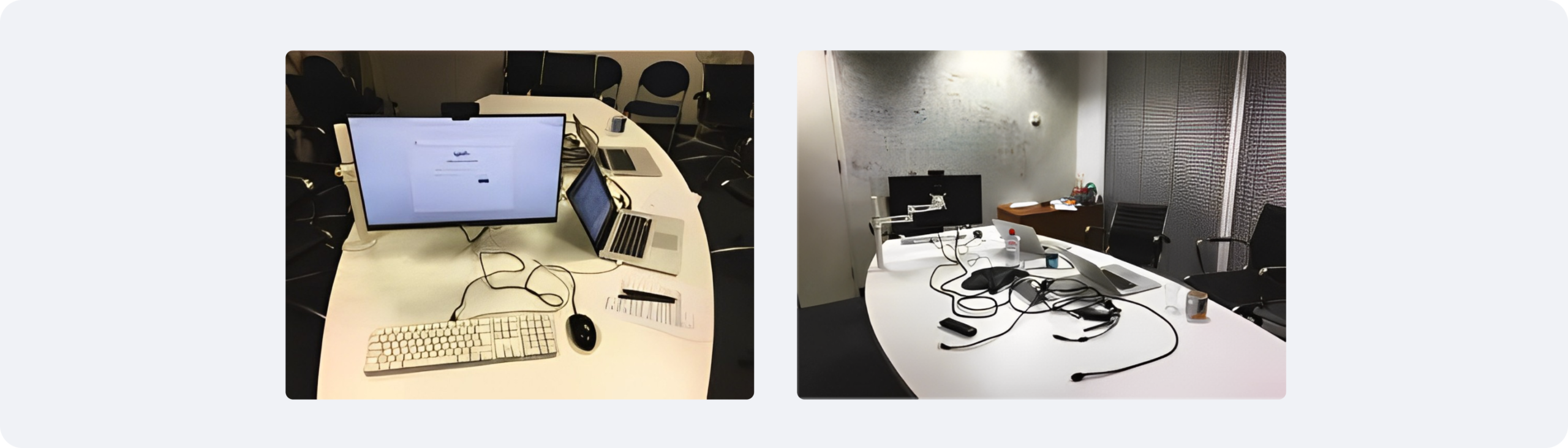
Makeshift user testing lab used for testing on internal Customer Service teams

Challenge

The process I was collapsing spanned three applications, two development teams and customer service teams in Warsaw and London. Turning that into one coherent system meant continuous communication across every one of those groups.

Language was its own design problem. I had to strip the technical jargon without borrowing vocabulary that customer service already used to mean something else.

Familiar words carrying the wrong meaning would have caused more errors than unfamiliar ones.

The platform also had to work across markets, so every design was produced in Polish and German alongside English.

Outcome

Integrations rose 10% once Customer Service adopted the tool, and the rollout went well enough that trials began in the Berlin and Dublin offices.

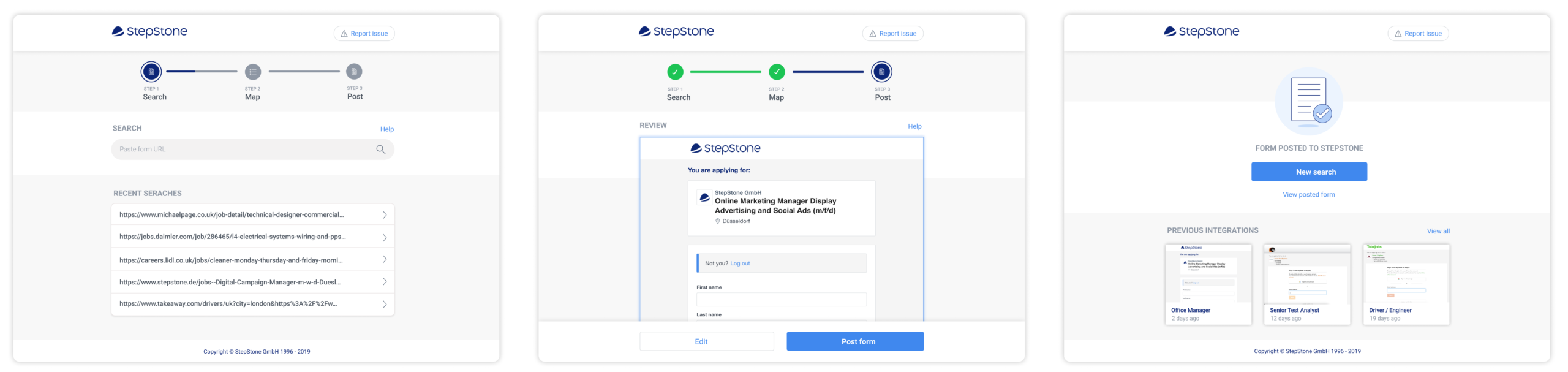
What shipped was a three-step process that automated the technical work behind it, in language rewritten so that someone with no technical background could complete an integration unaided.

Final user interface designs showing a three-step process for integrating third-party application forms

Reference

"Aaron is a very talented designer that I would love to work with on any product or project. We have worked together side-by-side for over a year and in that time I’ve seen that Aaron can do everything you want of a design leader and more. He has recruited customers for us to test new concepts, designed research plans to get answers to the questions we have. Then, talked with those customers with empathy and intrigue to uncover problems and find the patterns across different conversations. When it comes to designing solutions, Aaron is quickly able to put together concept maps, wireframes and high-fidelity designs depending on what is needed. He can then pair with engineers to make sure the experience is delivered to customers, being pragmatic when technical challenges mean a tweak is needed. Lastly, I’ve also observed that Aaron can recruit, manage and coach other product designers to build a design team. Work with him if you get the chance, your customers will thank you and you will have an insightful design leader at your side."

Aaron Cottrell
Senior Product Manger
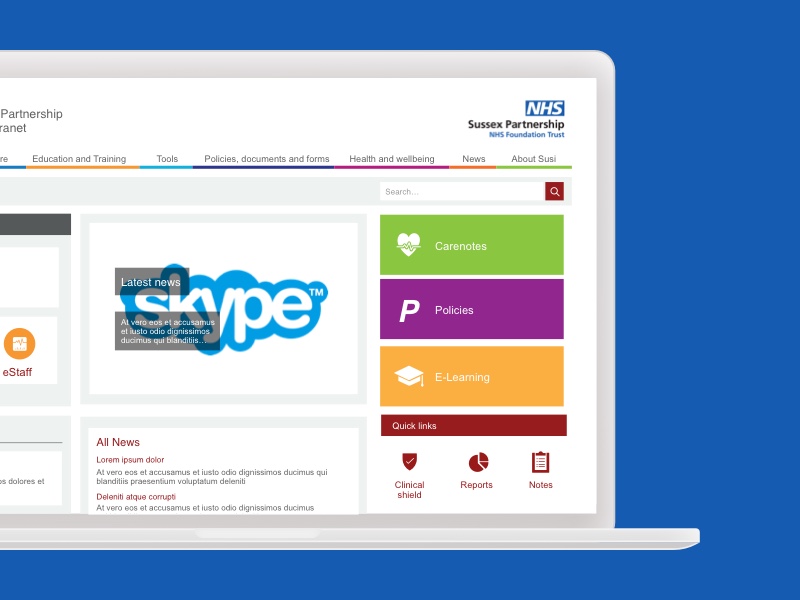
NHS

Intranet Redesign

Rebuilt the intranet end to end. Support tickets fell 20% alongside the redesign