

Elliptic
Product Vision
Elliptic provides blockchain analytics to organisations that need intelligence on crypto activity. I led the design of a new product vision, reorganising three separate products around the job analysts needed done most.
- Users
- Compliance Analysts and Government Investigators
- Ownership
- Product vision, IA and core analyst flows
- Role
- Design Lead
The problem
A fragmented product was slowing analysts down in a market that doesn’t wait.
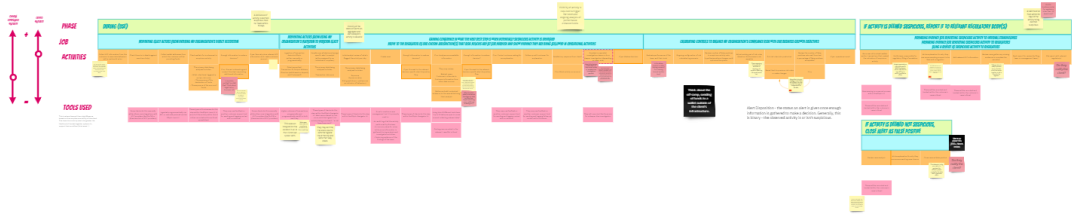
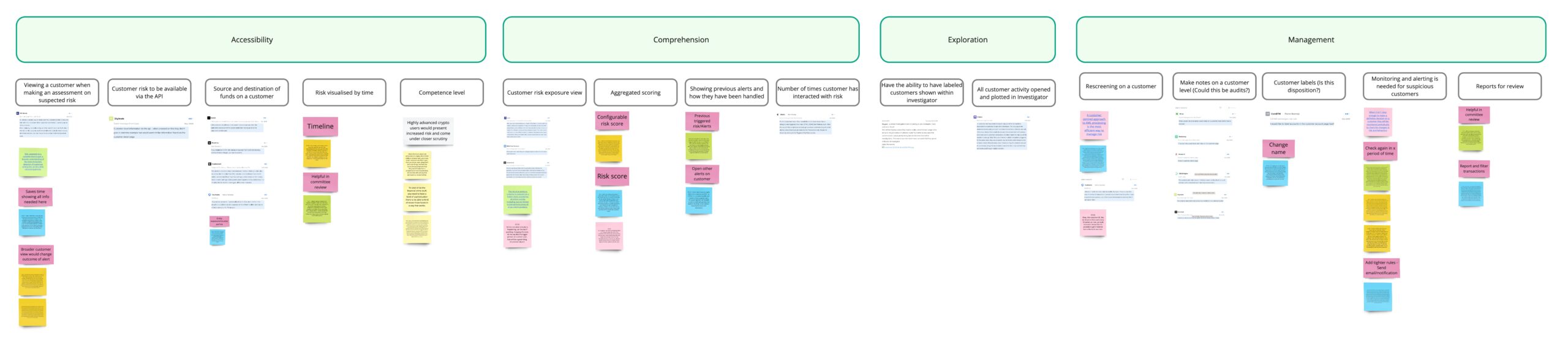
Elliptic’s three products had been built separately, as the organisation grew. Mapping the existing experience end to end showed that it was costing compliance analysts. They lost time moving between all three, and many were keeping spreadsheets alongside them just to manage their workload and track the risk they’d identified.
Separate products an analyst moved between
Kept on the side to manage workload and risk
In crypto, that lost time matters. Funds move faster than in traditional finance, so risk has to be caught and dealt with quickly. With little spare capacity and a product working against them, analysts were regularly missing risk.
What we found
Analysts needed a quick way to go from spotting risk to reporting it.
The existing research pointed to one job above all others: triaging risk and reaching a decision, fast. Doing that meant moving from detected risk, to investigating it, to visualising it as evidence for a Suspicious Activity Report (SAR). But that path was split across three products and a stack of spreadsheets.
Spot the risk
An alert flags suspected risk
Investigate
Open the risk and dig in
Visualise
Form the evidence
File a SAR
Report it and move on
If we brought the journey into one connected flow, from initial risk to SAR, analysts could drop the spreadsheets and act faster.
Key decisions
Three bets to turn triage into the main event.
I reorganised the product around the analyst’s core job. Three decisions carried it.
Triage-first alerts
An alert model that made triaging risk the primary action, rather than something pieced together across three products.
One view of risk
Risk aggregated around an actor on the blockchain, so analysts saw the full picture in one place.
Disposition
Recording a decision on suspected risk directly in the product, replacing the spreadsheets.
The handover to government investigators. We had little research on what they needed, so I focused the first round on compliance analysts. That gap is the one testing brought straight back to us.
Testing and iteration
Testing showed risk lives with the actor, not the transaction.
Round one
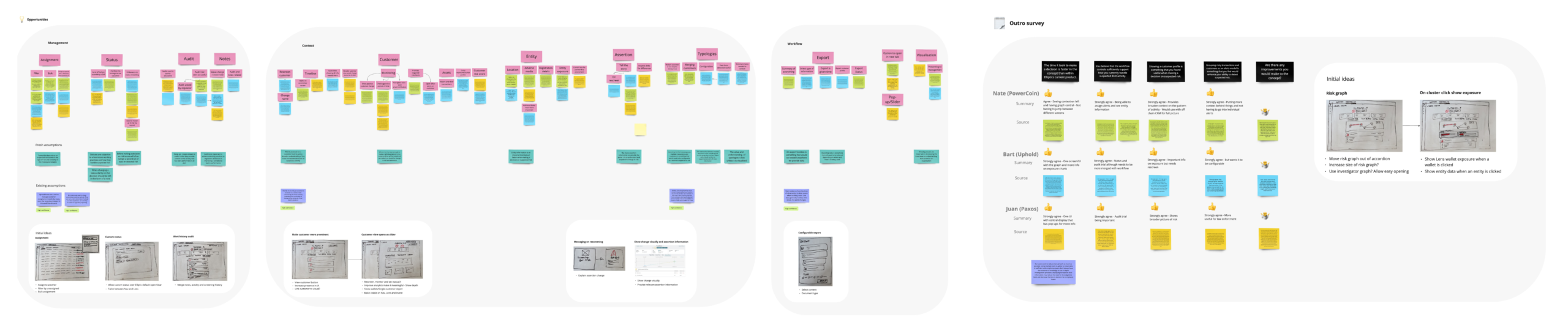
I tested the wireframes with five customers, split between crypto-native businesses and traditional financial institutions. The direction held, but two findings reshaped the design. Analysts spotted patterns by looking at an actor’s activity as a whole, so the lack of a detailed actor view was the proposal’s biggest omission. And how a case had been handled needed to be auditable in the system and passable to government investigators.
Digging deeper
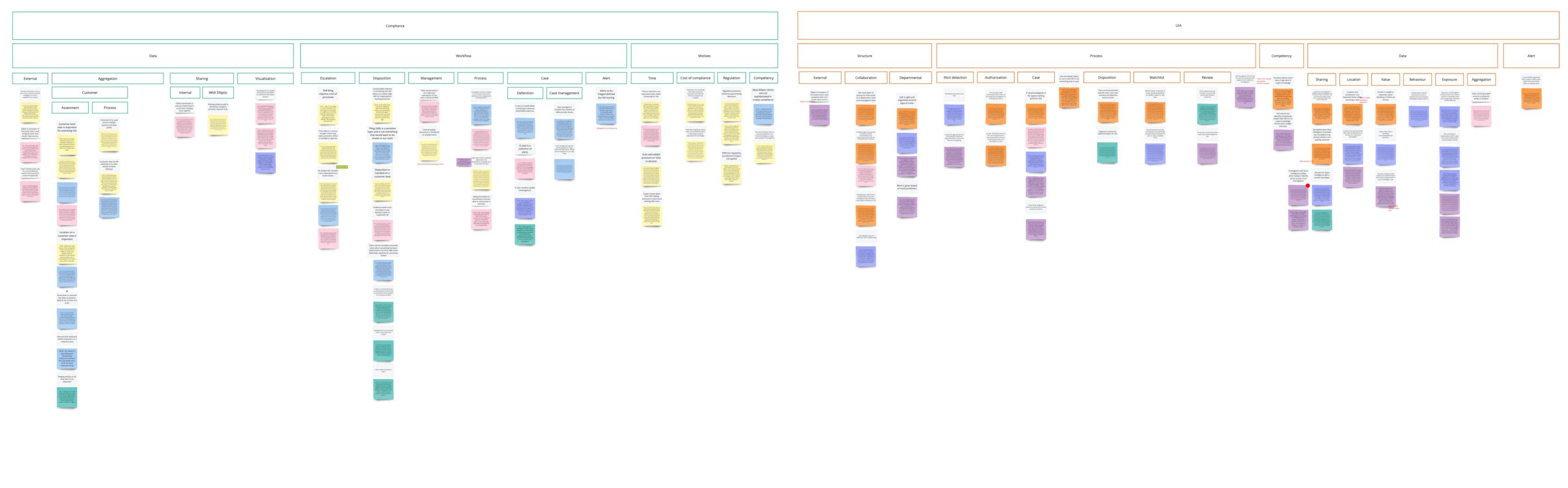
To understand the actor need properly, I went back to the research repository, looked at product feedback and interviewed our customer success teams specifically about this topic.
Government research
The audit finding exposed the gap I’d knowingly left open, so I kicked off research with government users. Their needs went further than compliance teams’. After further investigation, they would need to follow up with their own investigation, collecting hard evidence and present these visualisations and audit trails in court, towards eventual sentencing.
Round two
I redrew the wireframes around a richer actor view and an audit trail that could be easily exported, built to serve both groups. In the second round, participants found the product easier to navigate and gained a better understanding of risk across an actor as a whole.
Live on-site test
To back this with numbers, I ran live on-site tests, making the actor view more prominent in the product.
Visits to the actor view
To change a status
Challenges
Limited access to users, a vision to sell, and a roadmap to keep running.
Access to users
I rebuilt our relationship with the customer service teams and started a research community to grow a participant database. Where users still weren’t available, subject matter experts kept time to insight short.
Strategic buy-in
I ran the vision as an internal roadshow, presenting continually and bringing business leaders into the process early, rather than handing them a finished answer.
Roadmap balance
All of this ran alongside my roadmap commitments. Balancing the two slowed the initiative at points, and deciding what to defer each sprint was a constant judgement call.
Final designs
A Northstar vision from first alert to courtroom evidence.
The final designs brought the journey into one connected product. At its centre is an alert model with an auditable record of how each alert and case was handled.
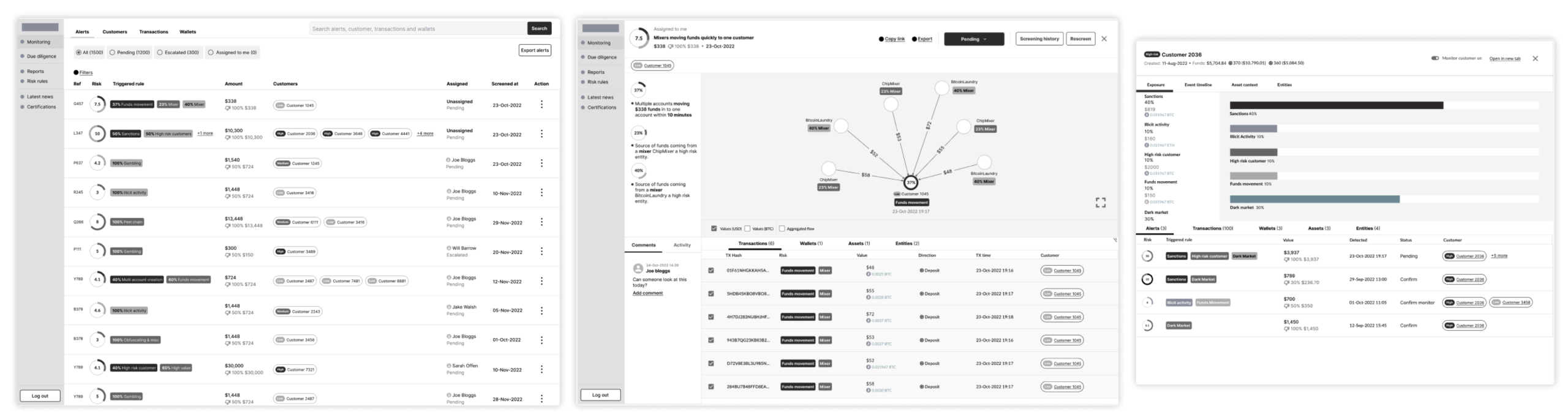
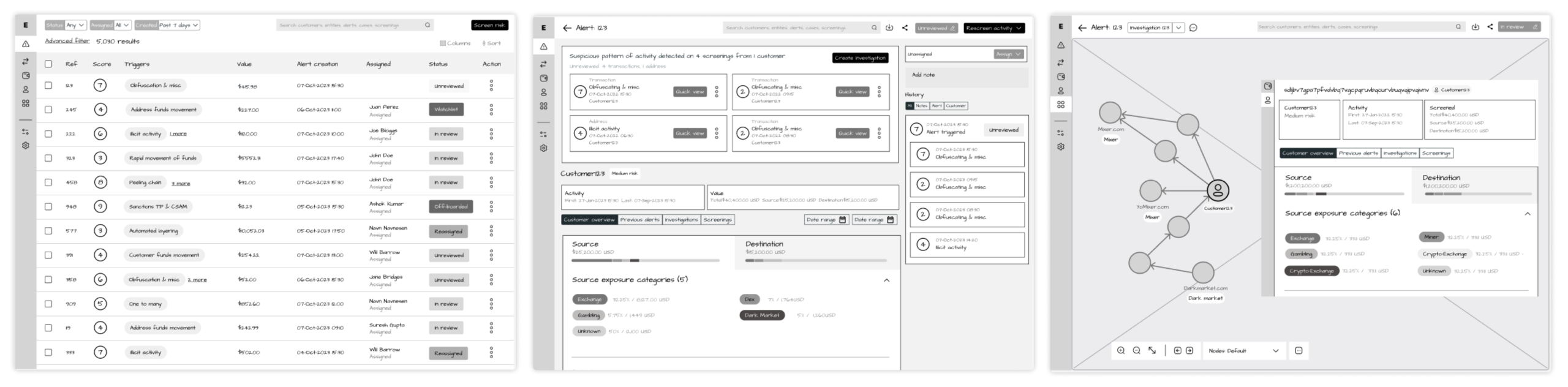
Triaging from an alert list into a single view of risk with assignment and a visible audit trail
Each alert includes a detailed actor view, so analysts can see an actor’s activity as a whole. They can also build risk visualisations to evidence illicit activity, serving compliance decisions and government investigators alike.
A single view of a customer’s risk and activity, without leaving the alert
Disposition closes the loop. Analysts record their decision, which is logged to the audit trail, and extract the data they need to file a SAR, replacing the spreadsheets entirely.
Opening an alert in the investigator for a deeper dive, then creating a package to hand off for SAR filing
To keep the build manageable, I split delivery into three initiatives, releasing value incrementally rather than holding everything back for the full vision.
1 · A deeper actor view
2 · Disposition tied to a visible audit trail
3 · Greater interoperability between products
The business committed a third of its development capacity to the vision for the following four quarters.
Recommendation
Stepstone
Conversion Optimisation
Rebuilt registration around the questions people could actually answer first time.